Introduction
On April 21, 2026, a deep report from The New York Times ignited the global tech community:
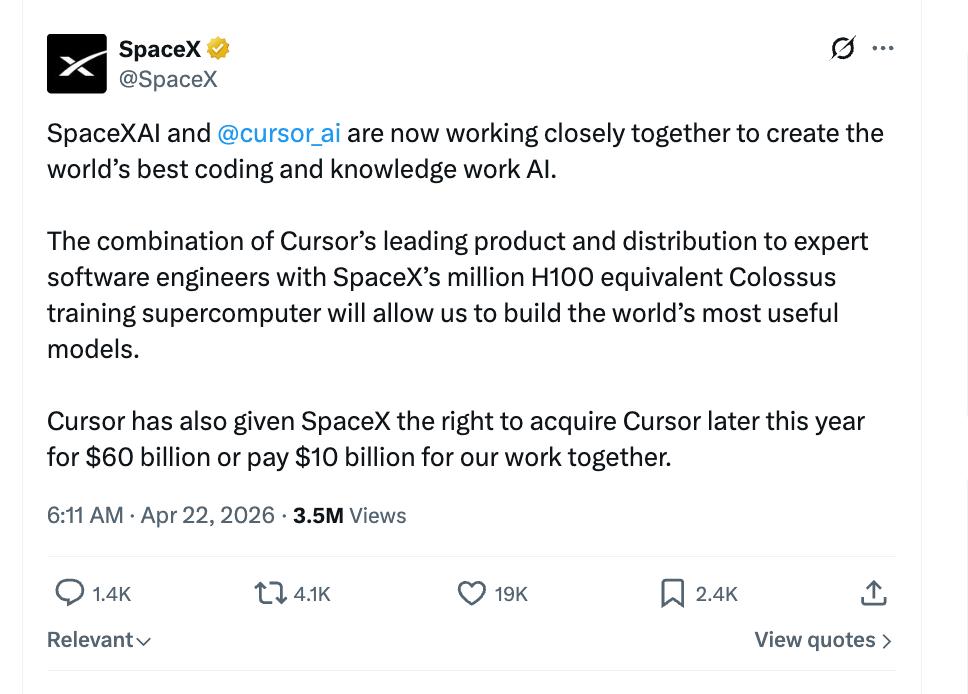
SpaceX has signed a binding option agreement with the AI programming upstart Cursor.
This deal is unique as it is not a straightforward purchase but a strategic option worth $60 billion. If finalized, it will set a new record for acquisitions in the AI industry; even if SpaceX backs out, it must pay a $10 billion breakup fee.
Transaction Structure
To clarify the transaction structure, this is not a traditional acquisition but a binding option agreement:
- Option 1: SpaceX can fully acquire Cursor for $60 billion later this year.
- Option 2: If SpaceX does not exercise the acquisition, it must pay Cursor $10 billion as a collaboration fee.
This means that regardless of SpaceX’s decision, Cursor secures a profit. The $10 billion breakup fee essentially locks in Cursor’s valuation, making it nearly impossible for other bidders to intervene.
The clever design of this transaction provides SpaceX with a flexible decision window while ensuring Cursor’s cooperation through high exit costs.
For Musk, this is a transaction where he can validate value through collaboration before deciding to fully acquire the company.
Why Not a Direct Acquisition?
Musk’s reluctance to make a direct purchase is to preserve cash for the upcoming IPO of SpaceX, which is set to be the largest in history this June.
Currently, SpaceX has just acquired xAI, achieving a valuation of $1.25 trillion. A sudden cash outflow of $60 billion would make the company’s financials look precarious. By signing this agreement, Musk preserves cash flow before the IPO while crafting an attractive AI narrative for investors.
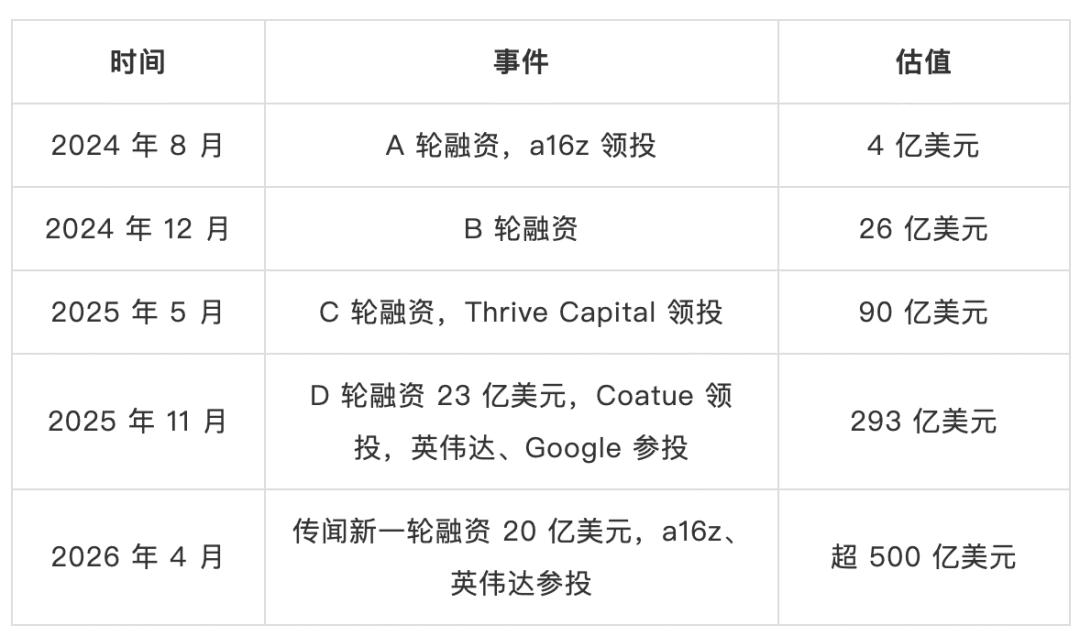
Additionally, he is racing against time in Silicon Valley. Cursor has become a beacon of hope, with giants like Nvidia lining up to invest, causing its valuation to soar from under $30 billion to over $50 billion in just six months.
Musk’s insight is clear: without locking in the price now, Cursor could become too expensive to acquire later.
Why is Cursor Valued at $60 Billion?
Cursor is like a “super brain” that writes code. Previously, coding required typing letter by letter, but with Cursor, programming becomes a conversation with AI. Just express your ideas, and it can automatically write, refine, and even debug the code.
This effortless approach to programming has been dubbed “ambient programming.”
Due to this revolutionary experience, Cursor’s valuation has skyrocketed faster than rockets themselves.
In just a year and a half, its valuation surged from $400 million to over $50 billion, a staggering increase of more than 120 times. This mythical growth rate has made it one of the hottest commodities in the tech world.
Musk’s Strategy: Filling Gaps, Boosting Valuation, Positioning for IPO
The occurrence of this transaction is not isolated; it follows three clear logical lines:
-
Filling the “brain gap”: No longer relying on competitors’ brains Musk has been dissatisfied with xAI’s coding capabilities. In March, he even poached two core executives from Cursor to lead the team. Currently, both Cursor and xAI are essentially “borrowing” AI brains from competitors like OpenAI. This collaboration aims to help Cursor develop its own “strongest coding brain,” eliminating the need to rely on competitors in the future.
-
Activating the “supercomputer”: Utilizing expensive GPUs Musk possesses what is touted as the world’s strongest supercomputer—Colossus. This machine houses hundreds of thousands of top-tier GPUs, and if left idle, it incurs astronomical losses daily. In this collaboration, Musk generously offers this computational power to Cursor. In essence, Musk is trading his “hardware resources” for Cursor’s “priority purchasing rights.”
-
Creating momentum for the “century IPO”: Doubling SpaceX’s valuation This is the most critical step. SpaceX plans to go public later this year, targeting a staggering valuation of $1.75 trillion, potentially becoming the largest IPO in human history. Announcing a deep partnership with the hottest AI programming company right before the IPO serves to craft an enticing “AI + rockets” narrative for investors. This story positions SpaceX not just as a rocket manufacturer but as an AI empire of the future.
For Cursor: Embrace or Shackles?
This $60 billion “acquisition option” represents a tempting yet risky “golden cage” for Cursor.
On one hand, Musk has locked in Cursor’s valuation, ensuring it remains stable amid the unpredictable AI wave. On the other hand, this “tycoon-style” agreement could scare off potential buyers.
If other giants offer higher prices in the coming months, or if SpaceX ultimately opts to pay the $10 billion breakup fee and walk away, Cursor might find itself with a windfall but missing out on deeper partnerships with other top-tier companies.
A deeper challenge lies in the clash of “genes” between the two companies. Cursor’s success is attributed to its finely crafted product, beloved by programmers, while Musk’s management style is known for being “hardcore” and decisive.
Many worry that if Cursor is integrated into SpaceX, this meticulous programming assistant may lose its unique product spirit. Will Musk’s pursuit of extreme efficiency strip Cursor of its community warmth?
However, if this puzzle fits together, Musk’s tech empire will complete its final evolutionary loop. From rockets soaring into space to a global Starlink network, to the strongest supercomputing power on Earth, and finally adding Cursor—an AI tool that allows humanity to “build software” with just their words—Musk will hold an all-encompassing empire from hardware to software, from Earth to outer space.
For Cursor, this is also a historic opportunity to transition from a “useful tool” to a “foundational platform.”
Regardless of the outcome, one thing is clear:
The competition in the AI programming arena has evolved from a product battle among startups to a strategic game among tech giants.
Comments
Discussion is powered by Giscus (GitHub Discussions). Add
repo,repoID,category, andcategoryIDunder[params.comments.giscus]inhugo.tomlusing the values from the Giscus setup tool.